


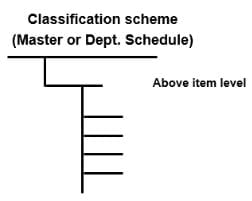
What for, that would probably be the follow-up question. In classic records and document management, file or retention schedules are understood as the central element for mastering documents. In information governance, however, a retention schedule is only one of many building blocks (under GEVER it is called a filing system). By focusing on the information view, it should only be used where one is actually dealing with records and documents in the classical sense. In addition, the essential rules of lifecycle management should be functionally integrated into a business application or ECM system to automate the process. Otherwise, the file plan (registry plan) remains a list of mere reference points that still requires a lot of manual work (destruction at the end of the lifecycle). This problem (lack of functional integration into a system) is at the same time the greatest weakness or deficiency of file plans and the main reason why their enforcement often remains so fragmentary.

Highlights from the krm Management Update 2025
The Management Update 2025 took place as usual in Zurich at Brasserie Lipp on the afternoon of January 29. In his hour-long keynote speech, Prof. Adrian Perrig from ETH Zurich spoke about the creation and development of the highly available SCION network and...


0 Comments